Featured Story
Featured Story
Maternal Health is an orphan prevention strategy
About HCW
Reports on accountability, stewardship, and allied funding processes.
Our Work
Our Ideas
Data, research, publications, media, curriculum, worship materials, and essential resources.
Empowerment approaches to development, locally led collaborations, respectful alliances, ethical practices, and sustainable progress.
We return every opportunity we can to Africa to work in collaboration with the staff and leadership there, as well as bringing them here, and spending hours each week in meetings together, planning and implementing our plans. The history of the CRC is best described as courageous compassion. After ten years of brutal civil war destroyed families and communities in Sierra Leone, thousands of children were separated from their parents, some living in over-crowded conditions with relatives and friends of their family they barely knew crammed into spaces too small to be safe. Some had not found a relative to shelter them, or chose to live in the streets, and others were hiding in the bush, alone and struggling to survive. There were still two more years ahead of them before the war would finally end, but the children’s survival required action. Faith-based missions were integrated into the fabric of society, connected to communities, and coming from them. Their personnel remained longer, stayed through out or returned faster, when other NGOs had fled for safety.
In the fall of 1999, Reverend John K. Yambasu was working as a children’s ministry missionary for the United Methodist Church Board of Global Ministries, posted in his hometown of Bo, Sierra Leone. He traveled to the US with a fervent hope of finding help for children who were orphaned or separated from their families. He reached out to his friend, Rev. Tom Berlin, who invited him to speak to his congregation in the greater D.C. area about dedicating a special Christmas Eve offering to help children they would most likely never meet. Children who were suffering far away in the city of Bo, Sierra Leone, West Africa.After Rev. Yambasu described his vision of a feeding program for children begging in the streets and sleeping under market tables in the City of Bo, to the congregation of Floris United Methodist Church in Northern Virginia, he received such an outpouring of generous support that he and Rev. Berlin realized God had bigger plans, and they courageously and faithfully answered the call to do more. With Floris’ ongoing annual support, the street feeding program was transformed into a residential home for children.
Children were rescued from the streets and the first forty children came to live at the Child Rescue Centre, finding a safe place to lay their heads at night, where they would be fed, clothed and educated.
And he took a child and put him in the midst of them, and taking him in his arms, he said to them, “Whoever receives one such child in my name receives me, and whoever receives me, receives not me but him who sent me.”
Mark 9:36-37
We are two hearts beating as one, two hands with one heart, reaching across the ocean for the love of God’s children.
Bishop John K. Yambasu, Child Reintegration Centre Co-Founder
Child Rescue to Child Reintegration
From children in need of rescue to families in need of support. Ways in which the CRC has been leading the way since July 4, 2000.
The war finally came to an end, but the effect of horrendous acts of violence and destruction in the name of political gain remain, even to this day.
In a part of the world where resources are scare and poverty endemic, war had made everything far, far worse. War destroyed what gains had been made over the past fifty years. Families had lost homes, children had lost parents. Conflict had rendered communities devastated and isolated, the railway tracks had been ripped up, hospitals, churches, mosques and schools destroyed. The already fragile education, health and social welfare systems were shattered. The need for assistance was extreme, and the government of Sierra Leone was not able to provide the help that was needed. Mission teams from Floris dispatched to Sierra Leone to help. The more trips they took to Bo, the more they felt called to help. They learned that the people of Sierra Leone fell among the highest poverty rates, lowest adult literacy rates, highest infant death rates, highest under 5 deaths, and highest maternal mortality rates in the world. They felt blessed by God, and called by their faith to act. They knew, the greater their generosity, the more the Child Rescue Centre could do for the impoverished children of Bo. But this was only one congregation, and as the work of the Child Rescue Centre expanded, so did the need for support. In 2003, Floris reached out to other churches, asking them to come together to support the orphanage in Sierra Leone.
From the CRC Partnership, an unincorporated church mission association to help orphans in Sierra Leone, to Helping Children Worldwide, a 501(c)3 Nonprofit Corporation with a global mission.
Around this same time, the leadership at Floris UMC established a nonprofit organization, Helping Children Worldwide, to capture the mission and pastoral leadership’s vision to bring together all of the church’s outreach ministries for children in a way that allowed them to access funds not available to churches. Their goals included expanded ability to provide financial and strategic support to the Child Rescue Centre, and to support a similar orphanage mission in Nicaragua, and to begin to develop or support more programs locally and abroad. Many of the leaders at Floris had been to Bo by then, and had seen for themselves the destruction of lives. Others in their congregation had connections in other threatened communities, knew of children in circumstances as dire and dangerous as threatened the survival of children they encountered in Bo. The acknowledgement was that they felt deeply that God had blessed their lives with riches, and they had a responsibility to answer God’s call to help. Rather than being overwhelmed by the size of the problem, their vision was to build a sturdy foundation to answer that call – to help every child they could, and to maintain the stability to be able to continue building off the foundation.
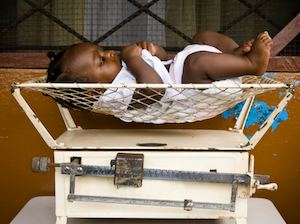
The board of the new nonprofit begin immediately building a health facility to serve children in the impoverished community in Sierra Leone, recognizing that health services is an upstream strategy to prevent children from becoming orphans, particularly maternal/infant prenatal and delivery services. The work in Nicaragua had ended, but the fledgling nonprofit immediately began seeking other, better ways they could serve more children beyond the collaborations in Africa. Their first new venture was a local coalition to serve impoverished children in the U.S. They ran Connections for Hope through its two-year establishment phase, and two years of operation, and that charity continues to this date, but was “spun off” and is no longer affiliated with Helping Children Worldwide.
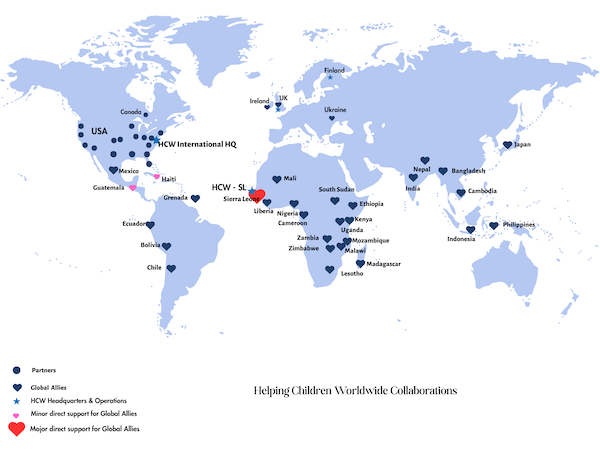
Today, the organization remains faith-based and is still connected to church communities from Virginia, Texas, South Carolina, North Carolina, Ohio, Massachusetts, Missouri, New Jersey, New York, Pennsylvania and Kansas who continue to support the work of Helping Children Worldwide. Some are Methodist Churches, but not all. Some join with us in full partnership, passionately advocating for children in Sierra Leone, and for children and families affected by extreme poverty in many communities and many ways all across the globe.
To learn more about the transformations in our alliance with the CRC in 25 years, including how it became a leader in the care reform movement, click the Read More button below.
And let us not grow weary of doing good, for in due season we will reap, if we do not give up.
Galatians 6:9‘
Child Rescue to Child Reintegration
From children in need of rescue to families in need of support. Ways in which the CRC has been leading the way since July 4, 2000.
The war finally came to an end, but the effect of horrendous acts of violence and destruction in the name of political gain remain, even to this day.
In a part of the world where resources are scare and poverty endemic, war had made everything far, far worse. War destroyed what gains had been made over the past fifty years. Families had lost homes, children had lost parents. Conflict had rendered communities devastated and isolated, the railway tracks had been ripped up, hospitals, churches, mosques and schools destroyed. The already fragile education, health and social welfare systems were shattered. The need for assistance was extreme, and the government of Sierra Leone was not able to provide the help that was needed. Mission teams from Floris dispatched to Sierra Leone to help. The more trips they took to Bo, the more they felt called to help. They learned that the people of Sierra Leone fell among the highest poverty rates, lowest adult literacy rates, highest infant death rates, highest under 5 deaths, and highest maternal mortality rates in the world. They felt blessed by God, and called by their faith to act. They knew, the greater their generosity, the more the Child Rescue Centre could do for the impoverished children of Bo. But this was only one congregation, and as the work of the Child Rescue Centre expanded, so did the need for support. In 2003, Floris reached out to other churches, asking them to come together to support the orphanage in Sierra Leone.
From the CRC Partnership, an unincorporated church mission association to help orphans in Sierra Leone, to Helping Children Worldwide, a 501(c)3 Nonprofit Corporation with a global mission.
Around this same time, the leadership at Floris UMC established a nonprofit organization, Helping Children Worldwide, to capture the mission and pastoral leadership’s vision to bring together all of the church’s outreach ministries for children in a way that allowed them to access funds not available to churches. Their goals included expanded ability to provide financial and strategic support to the Child Rescue Centre, and to support a similar orphanage mission in Nicaragua, and to begin to develop or support more programs locally and abroad. Many of the leaders at Floris had been to Bo by then, and had seen for themselves the destruction of lives. Others in their congregation had connections in other threatened communities, knew of children in circumstances as dire and dangerous as threatened the survival of children they encountered in Bo. The acknowledgement was that they felt deeply that God had blessed their lives with riches, and they had a responsibility to answer God’s call to help. Rather than being overwhelmed by the size of the problem, their vision was to build a sturdy foundation to answer that call – to help every child they could, and to maintain the stability to be able to continue building off the foundation.
The board of the new nonprofit begin immediately building a health facility to serve children in the impoverished community in Sierra Leone, recognizing that health services is an upstream strategy to prevent children from becoming orphans, particularly maternal/infant prenatal and delivery services. The work in Nicaragua had ended, but the fledgling nonprofit immediately began seeking other, better ways they could serve more children beyond the collaborations in Africa. Their first new venture was a local coalition to serve impoverished children in the U.S. They ran Connections for Hope through its two-year establishment phase, and two years of operation, and that charity continues to this date, but was “spun off” and is no longer affiliated with Helping Children Worldwide.
Today, the organization remains faith-based and is still connected to church communities from Virginia, Texas, South Carolina, North Carolina, Ohio, Massachusetts, Missouri, New Jersey, New York, Pennsylvania and Kansas who continue to support the work of Helping Children Worldwide. Some are Methodist Churches, but not all. Some join with us in full partnership, passionately advocating for children in Sierra Leone, and for children and families affected by extreme poverty in many communities and many ways all across the globe.