Featured Story
Featured Story
Maternal Health is an orphan prevention strategy
About HCW
Reports on accountability, stewardship, and allied funding processes.
Our Work
Our Ideas
Data, research, publications, media, curriculum, worship materials, and essential resources.
Empowerment approaches to development, locally led collaborations, respectful alliances, ethical practices, and sustainable progress.
Mercy Hospital’s long collaboration agreement to permit establishment and co-location of the independent Mercy Research Lab on the hospital grounds, and to share infrastructure, connections, and resources has been proven to be a boon to Mercy and the children of Sierra Leone, as their research contributed to the efforts to produce, introduce, and bring a vaccination to prevent malaria infections to the underserved at-risk populations in Bo and across Sierra Leone.
WHO News release – 10/6/2021 – Geneva
The World Health Organization (WHO) is recommending widespread use of the RTS,S/AS01 (RTS,S) malaria vaccine among children in sub-Saharan Africa and in other regions with moderate to high P. falciparum malaria transmission. The recommendation is based on results from an ongoing pilot programme in Ghana, Kenya and Malawi that has reached more than 900 000 children since 2019.
“This is a historic moment. The long-awaited malaria vaccine for children is a breakthrough for science, child health and malaria control,” said WHO Director-General Dr Tedros Adhanom Ghebreyesus. “Using this vaccine on top of existing tools to prevent malaria could save tens of thousands of young lives each year.”
Malaria remains a primary cause of childhood illness and death in sub-Saharan Africa. More than 260 000 African children under the age of five die from malaria annually.
In recent years, WHO and its partners have been reporting a stagnation in progress against the deadly disease.
“For centuries, malaria has stalked sub-Saharan Africa, causing immense personal suffering,” said Dr Matshidiso Moeti, WHO Regional Director for Africa. “We have long hoped for an effective malaria vaccine and now for the first time ever, we have such a vaccine recommended for widespread use. Today’s recommendation offers a glimmer of hope for the continent which shoulders the heaviest burden of the disease and we expect many more African children to be protected from malaria and grow into healthy adults.”
WHO recommendation for the RTS,S malaria vaccine
Based on the advice of two WHO global advisory bodies, one for immunization and the other for malaria, the Organization recommends that:
WHO recommends that in the context of comprehensive malaria control the RTS,S/AS01 malaria vaccine be used for the prevention of P. falciparum malaria in children living in regions with moderate to high transmission as defined by WHO. RTS,S/AS01 malaria vaccine should be provided in a schedule of 4 doses in children from 5 months of age for the reduction of malaria disease and burden.
Summary of key findings of the malaria vaccine pilots
Key findings of the pilots informed the recommendation based on data and insights generated from two years of vaccination in child health clinics in the three pilot countries, implemented under the leadership of the Ministries of Health of Ghana, Kenya and Malawi. Findings include:
Next steps for the WHO-recommended malaria vaccine will include funding decisions from the global health community for broader rollout, and country decision-making on whether to adopt the vaccine as part of national malaria control strategies.
Financial support
Financing for the pilot programme has been mobilized through an unprecedented collaboration among three key global health funding bodies: Gavi, the Vaccine Alliance; the Global Fund to Fight AIDS, Tuberculosis and Malaria; and Unitaid.
Note to editors:
A few months before the vaccine was recommended by the WHO, a research team working with the research lab at Mercy Hospital did a study in Bo to determine if people would be willing to receive a malaria vaccine.
Are malaria transmission-blocking vaccines acceptable to high burden communities? Results from a mixed methods study in Bo, Sierra Leone
Kaci D McCoy # 1 2, Caroline T Weldon # 1, Rashid Ansumana 3 4, Joseph M Lamin 3, David A Stenger 5, Sadie J Ryan 1 2 6, Kevin Bardosh 7, Kathryn H Jacobsen 8, Rhoel R Dinglasan 9 10
Affiliations expand
PMID: 33849572
PMCID: PMC8045381
DOI: 10.1186/s12936-021-03723-0
Abstract
Background: Malaria transmission-blocking vaccines (TBVs) could help break the cycle of malaria transmission by conferring community rather than individual protection. When introducing new intervention strategies, uptake is dependent on acceptability, not just efficacy. In this exploratory study on acceptability of TBVs in Sierra Leone, it was hypothesized that TBVs would be largely acceptable to adults and health workers in areas with relatively few ongoing malaria interventions, and that (i) knowledge of malaria and vaccines, (ii) health behaviours associated with malaria and vaccines, and (iii) attitudes towards different vaccines types could lead to greater TBV acceptability.
Methods: This study used a mixed methods approach in Bo, Sierra Leone, to understand community knowledge, attitudes, and practices related to malaria and vaccination in general. This included: (i) a population-based cross-sectional survey (n=615 adults), (ii) 6 focus group discussions with parents, and (iii) 20 key informant interviews. The concept of a TBV was explained to participants before they were asked about their willingness to accept this vaccine modality as part of an integrated malaria elimination programme.
Results: This study found that most adults would be willing to receive a TBV vaccine. Respondents noted mostly positive past experiences with adult and childhood vaccinations for other infectious diseases and high levels of engagement in other malaria prevention behaviors such as bed nets. Perceived barriers to TBV acceptance were largely focused on general community-level distribution of a vaccine, including personal fears of vaccination and possible costs. After an explanation of the TBV mechanism, nearly all focus group and interview participants believed that community members would accept the vaccine as part of an integrated malaria control approach. Both parents and health workers offered insight on how to successfully roll-out a future TBV vaccination programme.
Conclusions: The willingness of community members in Bo, Sierra Leone to accept a TBV as part of an integrated anti-malarial strategy suggests that the atypical mechanism of TBV action might not be an obstacle to future clinical trials. This study’s findings suggests that perceived general barriers to vaccination implementation, such as perceived personal fears and vaccine cost, must be addressed in future clinical and implementation research studies.
Africa and in other regions with moderate to high P. falciparum malaria transmission. Malaria is the number one cause of death in children under 5 in Sierra Leone, and P. falciparum malaria is the deadliest of all the malarial parasites.
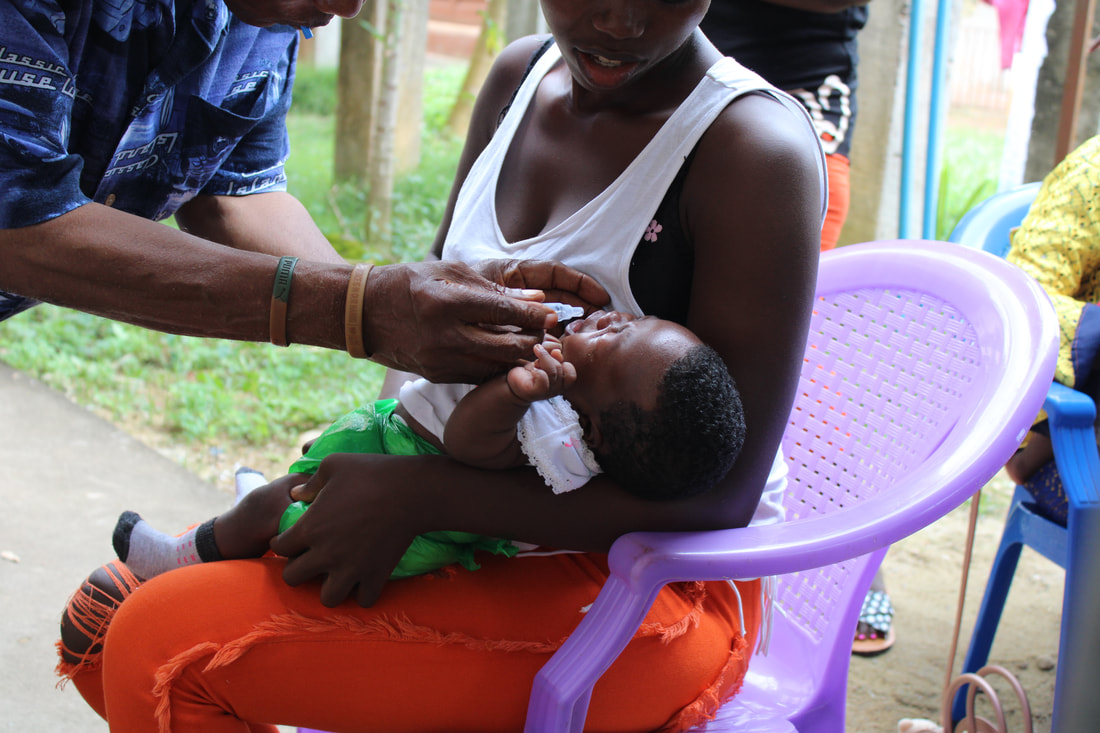
Mercy Hospital isn’t just a center for groundbreaking research; it’s also a trusted name in healthcare delivery. The hospital serves as a site for the World Health Organization’s Expanded Programme on Immunization (EPI). Every week, an EPI representative visits Mercy Hospital to vaccinate children under the age of five brought in by their mothers. This program has saved countless lives by providing vital immunizations to children around the globe.