
Lessons from the Empowerment Shift.
Empowerment is not giving people what we think they need; it’s creating space for them to shape their own future
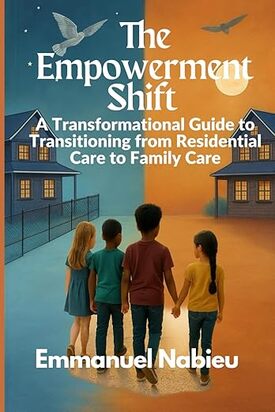
In Emmanuel Nabieu’s new book, The Empowerment Shift: A Transformational Guide to Transitioning from Residential Care to Family Care (available on Amazon), he explores why moving from institutional orphanage care to family and community-based care is not just a programmatic change, but a transformational shift in mindset, purpose, and impact. The following excerpt explains why this shift is so critical—and how it can only succeed through empowerment, collaboration, and locally led leadership. |
from Chapter 1 (pages 24–28) The Empowerment Shift
Transitioning from orphanage care to family and community support is more than a change in operational strategy—it is a profound shift in mindset, purpose, and impact. The Empowerment Shift is about flipping the traditional model of aid upside down. It moves away from dependency-creating handouts toward a sustainable “hand-up” approach that restores dignity, builds resilience, and creates lasting change for families, communities, and the mission itself.
The Empowerment Shift is about putting families back at the center of care, equipping them to nurture, protect, and thrive together. This shift recognizes that:
- Empowering communities strengthens the social fabric. Communities flourish when families are supported to thrive, creating a ripple effect of stability, hope, and growth.
- Empowering families is the best way to strengthen those in need of support and help them remain intact. Families are not the problem; they are the solution.
- Empowering organizations aligns with mission and purpose. Transitioning to caring for children in families restores the dignity of aid work, ensuring it creates independence rather than dependence.
Empowerment restores dignity. When families are given the tools and resources to address their unique challenges, they are no longer passive recipients of aid but active participants in their journey to success. This empowerment shift provides:
- Dignity and Responsibility: Families take ownership of their futures through tailored support plans that align with their needs and strengths.
- Stability and Sustainability: By addressing root causes like poverty and lack of access to resources, families are set on a path to long-term self-reliance.
- Unity and Belonging: Reunifying children with their families heals emotional wounds and strengthens bonds that are vital for a child’s holistic development.
Communities flourish when families are empowered. This transformation isn’t limited to individual households—it sparks a collective revival of social and economic health.
Through family care:
- Local leaders and organizations are engaged, creating a shared responsibility for child welfare.
- Resources are redirected to strengthen families and empower communities through initiatives such as capacity building, education, healthcare, livelihood support, parenting programs, psychosocial services, and more.
- Stigma is replaced by stories of resilience: The stigma around poverty and broken families is replaced with stories of hope and restoration.
This shift represents a profound alignment with the heart of the child welfare mission and ministry to care for children. It recognizes that caring for children means addressing not only their tangible needs—like food, shelter, and education—but also their intangible needs: the love, connection, and belonging that only a family can provide. Children thrive when their physical, emotional, and spiritual needs are met holistically. By transitioning to family care, this shift reflects a commitment to caring for the whole child and nurturing the bonds that give them the foundation to flourish. Families are the first and most enduring source of love and connection for children. When empowered, families can provide the stability and support that children need to grow, heal, and thrive in every aspect of their lives.
This shift is not the end of the mission but the beginning of its expansion. It transforms the approach to caring for children, creating opportunities to touch the lives of many more children, families, and communities.
By empowering families and communities, this shift enables organizations and ministries to:
- Reach more children: Family care allows resources to be used more effectively, enabling support for a greater number of children and families in need.
- Strengthen communities: When families are restored, communities are strengthened. This shift builds a network of care and connection that ripples outward, fostering resilience and hope.
- Achieve long-term impact: Empowered families are better equipped to break cycles of poverty and vulnerability, creating lasting change for generations.
This shift reflects the deeper calling to not only meet immediate needs but to transform lives in a way that is sustainable and dignified. It is about giving children the love, security, and opportunities they need to thrive—not in isolation but within the embrace of a family and a supportive community. By embracing this empowerment shift, the mission to care for children grows beyond what was previously imagined. It transitions from a dependence model to one of partnership and collaboration, where families are supported to succeed and ministries are strengthened to fulfill their purpose on a greater scale.
This is not just a shift—it is a transformation. It is the beginning of a movement that puts love, dignity, and hope at the center of care. The Empowerment Shift is the gateway to a brighter, more connected, and more empowered future for all. When families are empowered, they grow stronger, children thrive, communities flourish, and the world becomes a better place for everyone.
One of the most common questions asked when discussing the transition from orphanage to family care is: who should initiate the shift? Is it the responsibility of the local stakeholders, such as the orphanage director, founder, or board of directors? Or should it come from the international donors and funding organizations, who often provide the financial resources to sustain the orphanage? The answer is both nuanced and simple: while the shift is most effective and sustainable when initiated by local stakeholders, it requires the full support, partnership, and resources of international donors and organizations to succeed. A truly transformational shift to family care is a collaborative process, intentionally designed to empower both local leaders and international partners to work together in a shared mission of advancing child welfare.
Typically, the most impactful shifts to family care are led by local stakeholders. While the initial idea may come from various parties, including partners or donors, it is essential for local leaders to take a leading role. This ensures the initiative is sustainable, as locally driven efforts are better positioned to understand and respond to community needs and long-term goals.



Meet Our Guest Blogger
- Author
- Care-leaver
- Internationally Recognized Expert & Speaker on Global Alliance & Care Reform
- HCW Director of Mission Advancement & Partnership Development
- Doctoral Candidate
If you’d like to dive deeper into these ideas and explore more stories and practical insights, you can find The Empowerment Shift available on Amazon [HERE]. It offers a fuller picture of how this transformational approach is changing lives around the world.